Duke-UNC China Leadership Summit
  • Home
  • Apply
  • About
    • About Us
    • Our Team >
      • Alumni
    • Past Summits
    • FAQ
  • Gallery
  • Sponsors
    • Our Sponsors
    • Sponsor Us
  • CN | 中文
 16th Annual

DUKE-UNC
CHINA LEADERSHIP
​SUMMIT

February 20th - 22nd, 2026
​​​Durham, North Carolina, United States
Sharing the Future: Global Connectivity and Collaboration in U.S.-China Relations (2026)
In today’s interconnected world, the United States and China stand as the two largest players in  the global system, distinct in values and governance, yet bound together by economic ties, technological interdependence, and shared global commitments and responsibilities. This bilateral relationship has shaped the contours of international order for decades. As the world faces mounting challenges and promising opportunities: climate change, economic decoupling, geographical conflicts, technological rivalries, we at CLS seek to analyze how these two superpowers will come together to shape our world’s shared future. 

The future of U.S.-China relations relies on both acknowledging and strategically managing the two nations’ differences, alongside a commitment to cooperation in a diverse range of areas that promise transformative benefits. However, several critical questions remain regarding this path forward: Through what channels and methods will the two nations come together to negotiate cooperation? What collaborative frameworks can be established to address the pressing global challenges of today and of tomorrow? Where do shared interests create opportunities for joint leadership, and where must they sometimes diverge to allow for the harmonious co-existence of these two superpowers? 
​

We aim to examine these questions and imagine the various possibilities for a more connected and collaborative global order at the 2026 Duke-UNC China Leadership Summit: Sharing the Future: Global Connectivity and Collaboration in U.S.-China Relations.
Click to Apply

What is CLS?

The Duke-UNC China Leadership Summit (CLS) invites leading experts to speak on topics of importance to the U.S.-China relations and create a platform for students from across the United States and all over the world to exchange perspectives on these issues, connect with speakers, and network with one another. CLS hosted students for the first time in the spring of 2011. Since then, our annual conference has more than tripled in size from 40 students in 2011 to 160 students in 2025.
15 Annual Summits​
57 Represented Universities
1613 Student Delegates

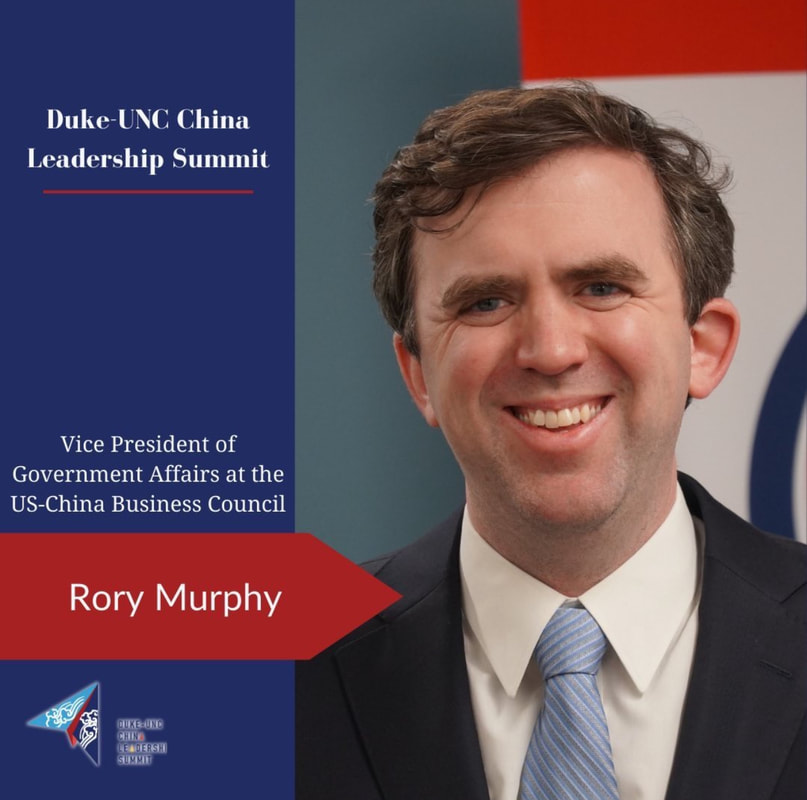
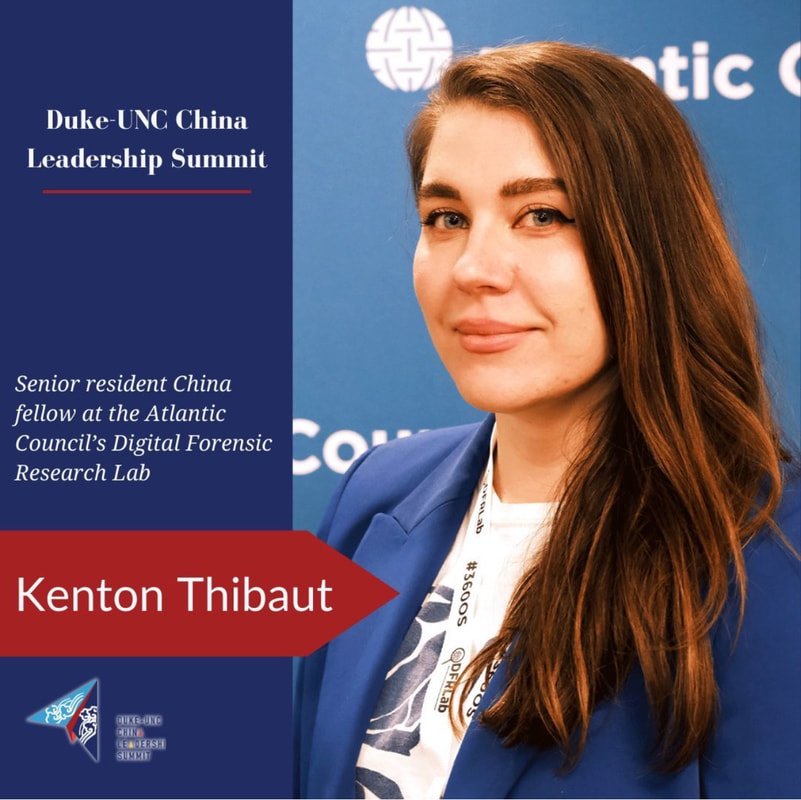
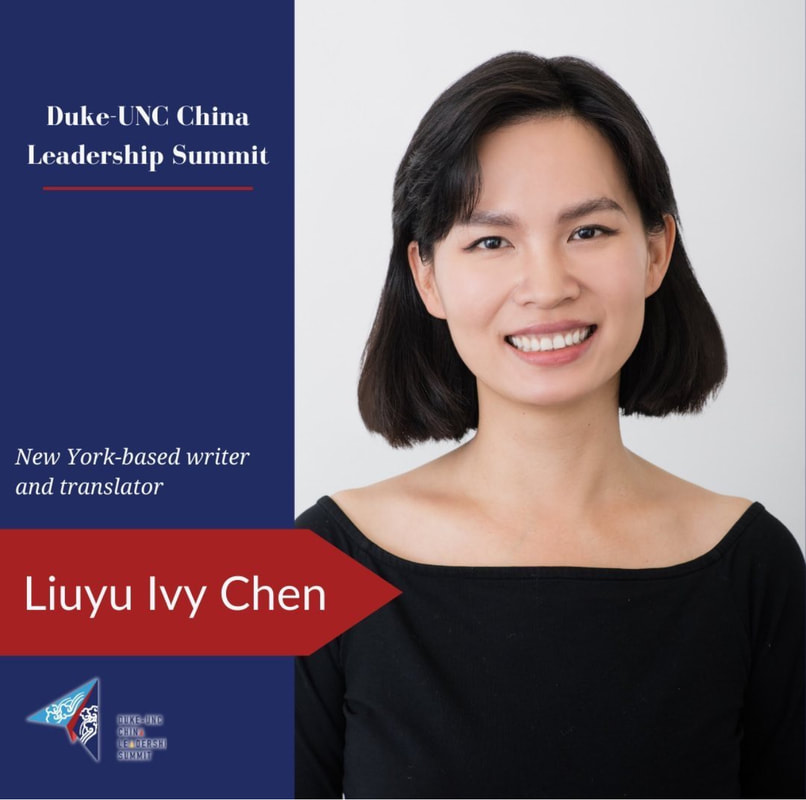
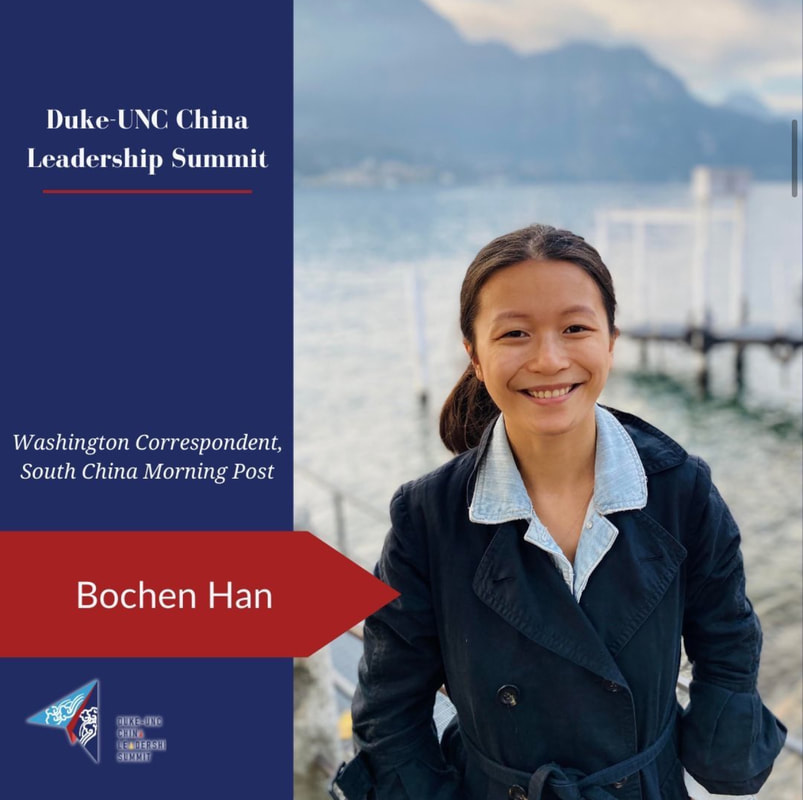
CLS 2026 Summit Speakers 

Our past speakers have been experts on U.S.-China relations and China studies, ranging from diplomats, senior officials, government advisors, retired senior military officers, and leaders of international organizations to scientists, professors, research fellows, journalists, activists, and artists. They come from both China and the United States as well as other parts of the world, represent a diverse set of opinions and perspectives, and bring meaningful insights to our summit. Our 2026 summit speakers are no different:
Dr. Andy Rodekohr is an Associate Professor and Chair of East Asian Languages and Cultures at Wake Forest University. His scholarly work focuses on Chinese and East Asian film, literature, and popular culture. His current book project, Crowd Spectacular: Conjuring the Masses in Modern China, foregrounds the imagination, representation, and circulation of crowd images in China as a mode of cultural production pivotal to the ideological construction of the political masses. Rodekohr's other research interests include the development of cinematic new waves in Hong Kong, Taiwan, and China, the musical, cultural and technological legacies of the pop singer Teresa Teng, and the globalization of Chinese martial arts through narrative.
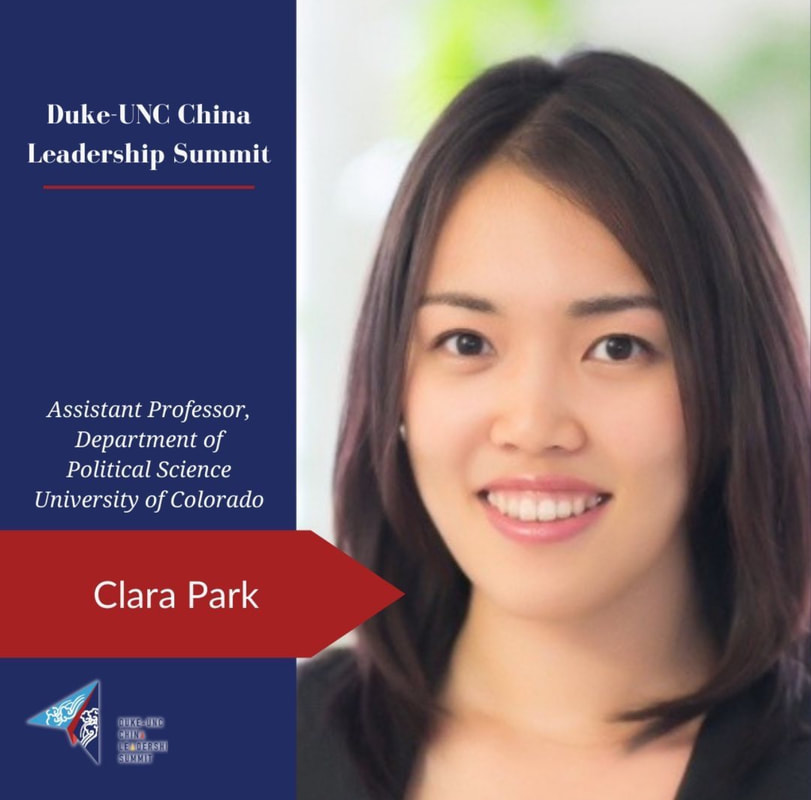
Clara Park is a Senior Research Scientist at Duke University. Her scholarly work examines international trade and finance, climate change, and US foreign economic policy in the Asia-Pacific region. Her most recent book, Making Financial Globalization (Oxford University Press, 2024), examines the interaction of institutions and interest groups in financial globalization. Her forthcoming books focus on the Geopolitics of the Critical Minerals Supply Chain and the Political Economy of Climate Change.
David J. Firestein is the inaugural president and CEO of the George H. W. Bush Foundation for U.S.-China Relations (Bush-China Foundation). A decorated career U.S. diplomat from 1992–2010, Firestein specialized primarily in U.S.-China relations. Among the honors he garnered during his diplomatic career were the Secretary of State’s Award for Public Outreach (2006) and the Linguist of the Year Award (1997). Prior to joining the Bush China Foundation, Firestein was the founding executive director of The University of Texas at Austin’s (UT) China Public Policy Center (CPPC) and a clinical professor at UT’s Lyndon B. Johnson School of Public Affairs. Firestein also previously served as senior vice president and Perot Fellow at the New York City-based EastWest Institute (EWI).
Han Chen is a China researcher based in Washington, D.C. At work, he manages an open-source project, coordinates events, and conducts wide-ranging research related to China's domestic politics and foreign policy. Previously, he was an editorial fellow at Axios with a focus on U.S.-China relations and demographic trends. He also worked as a broadcaster with Radio Free Asia, where he reported on human rights in China and Beijing's influence abroad. His work has also appeared in Foreign Policy, The Diplomat, and Voice of America, among other outlets. He graduated from Craig Newmark Graduate School of Journalism at the City University of New York with an M.A. in international reporting, and he holds a B.A. in journalism with a minor in Jewish studies from Pennsylvania State University. Han was born and raised in China, but he has now spent almost half of his life in the United States.
Dr. Jackson Ewing is director of energy and climate policy at the Duke University Nicholas Institute of Energy, Environment & Sustainability. He is also an adjunct associate professor at the Nicholas School of the Environment and a faculty affiliate with the Duke Center for International Development at the Sanford School of Public Policy. Dr. Ewing’s current work focuses on international climate finance and just energy transition partnerships, environmental markets, US national energy transition policies, and US-China climate and energy relations. He also leads educational exchanges between Asia and the United States through a leadership role with Duke Kunshan University in greater Shanghai. Prior to joining Duke, Dr. Ewing was director of Asian Sustainability at the Asia Society Policy Institute under the leadership of the Hon. Kevin Rudd, where he led projects on Asian carbon market cooperation and sustainable resource development in the ASEAN Economic Community.
James Hudson is an Associate Professor of History at the University of North Carolina at Pembroke. His scholarly work focuses on the early 20th-century trade relationship between the United States and China, particularly through the lens of the Standard Oil Company of New York. His upcoming book project is entitled Under Siege: Standard Oil in Nationalist South China, 1915–1937. Hudson was recently named a minority-serving institutions faculty fellow by the Carolina Asia Center and Carolina Asia Center and the Institute for the Arts and Humanities at UNC–Chapel Hill.
Jean C. Oi is the William Haas Professor of Chinese Politics in the Department of Political Science and a Senior Fellow at the Freeman Spogli Institute for International Studies (FSI) at Stanford University. She is on academic leave 2025-2026 to be the Inaugural holder of the Goh Keng Swee Chair in Chinese Studies, East Asian Institute, National University of Singapore. Her scholarly work focuses on comparative politics, with special expertise on China’s political economy and institutions in the process of reform. Oi's first book, State and Peasant in Contemporary China: The Political Economy of Village Government, examined the interaction between peasant leaders and state officials, and in particular the relationship between power at the level of villages and higher regional powers. Her second book, Rural China Takes Off: Institutional Foundations of Economic Reform, studied the actions and incentives of government officials in China at local and regional levels. A 2019 study showed that Oi was among the top 40 most-cited female scholars in the field of political science.
Jeannette L. Chu is Vice President for National Security Policy at the National Foreign Trade Council. In this role, she leads efforts to advance the interests of U.S. business in safeguarding U.S. national security and promoting global security through export controls, sanctions regimes and policy initiatives. She previously served as a Senior Managing Director at PricewaterhouseCoopers, advising U.S. and multinational companies and co-leading the national security regulatory compliance practice. She has also served as a Senior Policy Advisor at the Bureau of Industry and Security (BIS) in the U.S. Department of Commerce, where she worked on export control reform, export licensing and foreign policy matters.
Keren Zhu is an Assistant Professor of Political Science at Davidson College. Her scholarly work examines global China, infrastructure development, US-China relations, and East Asian political economy, with a particular focus on China's Belt and Road Initiative. Zhu also hosts The Belt and Road podcast, which explores the changing faces of China’s global engagement, and her upcoming book project studies the impact of China-financed infrastructure projects on the Global South. Prior to joining Davidson College, Zhu taught at the University of Southern California and conducted research as a postdoctoral research fellow at the Boston University Global Development Policy Center and The New School India China Institute.
Klaus Larres is the Richard M. Krasno Distinguished Professor at the University of North Carolina at Chapel Hill. His scholarly work focuses on contemporary U.S. and German/EU foreign, economic, and security policies toward the transatlantic world, China, and Southeast Asia. He has authored, co-authored, and edited numerous books in the field of international relations. Larres' most recent book, Uncertain Allies: Nixon, Kissinger and the Threat of a United Europe (Yale UP, 2022), examines transatlantic tension and disputes during the Nixon/Kissinger era. He previously served as a Global Europe & Kissinger China Institute Fellow and then a Global Fellow at the Woodrow Wilson Center, in addition to the Henry A Kissinger Chair in Foreign Policy and International Relations at the Library of Congress. He also served as a Senior Policy Adviser at the German Embassy in Beijing, China. Larres writes a regular column 'Understanding America' and 'Impressions from China' for the German daily newspaper Koelner Stadtanzeiger. Website: www.klauslarres.org
Min Jiang is a Professor of Communication Studies at the University of North Carolina at Charlotte and a Secretariat member of the annual international Chinese Internet Research Conference. Her scholarly work examines the intersection between digital technology, geopolitics, and policy with a focus on China and the Global South. Jiang recently co-edited the book Digital Sovereignty in the BRICS Countries, which was published by Cambridge University Press in 2024. She also edits several flagship academic journals in Communication Studies, including International Journal of Communication, Journal of International and Intercultural Communication, Global Perspectives and Communication & the Public.
Ryan McElveen serves as managing director of the U.S.-China Education Trust (USCET) and a member of the Fairfax County School Board, to which he was first elected in 2011. Prior to joining USCET, he served for 13 years as associate director of the John L. Thornton China Center at the Brookings Institution, where he oversaw U.S.-China track II dialogues and institutional partnerships. McElveen's work on the U.S.-China Dialogue on Artificial Intelligence and National Security laid the groundwork for the November 2024 agreement between Presidents Xi Jinping and Joe Biden to maintain human control over the decision to use nuclear weapons and the creation of a U.S.-China glossary of AI terms to serve as a basis for future negotiations and agreements. He is also the founder and managing director of the Global Leaders of Fairfax County program, which prepares high school seniors to be global citizens and change agents in their community and the world. He holds a M.I.A. in human rights from Columbia University and a B.A. in Anthropology and East Asian Studies from the University of Virginia.
Shu-chin Tsui is a Professor of Asian Studies and Cinema Studies at Bowdoin College. Her scholarly work extends across film studies, cultural studies, and visual art studies with a focus on gender politics. She most recently published the book Ecological and Environmental Turns: (Re)mapping China’s Sociocultural Landscape through Ecocinema (Cambria Press, 2025), which addresses critical issues related to the eco-environmental crisis. Tsui's first book, Women Through the Lens: Gender and Nation in a Century of Chinese Cinema, considers the role of women as visual image and discursive element in twentieth-century China. Her second book, Gendered Bodies: Toward A Women’s Visual Art in Contemporary China, examines how female artists employ the body as a mode of self-expression and respond to socio-political issues. She also spearheaded an art exhibition named Break Through: Women Artists and Works in Contemporary China at Bowdoin in 2013.
Surain Subramaniam is a Professor of International & Asian Studies at the University of North Carolina in Asheville. His scholarly work examines democratization in Southeast Asia, specifically in Malaysia and Singapore; challenges to liberal democratic governance from rising non-Western societies; and the effects of globalization on Asia. Subramaniam co-authored the book China's Peaceful Rise: Perceptions, Policy and Misperceptions, published by Manchester University Press (U.K), which considers the rise of China through a constructivist lens, and is currently working on a book on Singapore, titled, The Singapore Model: A Quest For a Unique Identity, under contract with the State University of New York (SUNY) Press. He previously served on the Board of Directors of ASIANetwork (2014-2017), and currently serves on the Editorial Board of ASIANetwork Exchange: A Journal of Asian Studies in the Liberal Arts.
Ting Wang is an Assistant Professor of Sociology, Criminology & Justice at the University of North Carolina in Greensboro. As a passionate criminologist with a focus on gender issues, her scholarly work encompasses criminology, criminal justice, gender studies, social network analysis, Asian and Asian American Studies, and China Studies. Her debut book, The Lonely Generation: Unraveling China’s Population Crisis After the One-Child Policy, explores how the evolution or stagnation of China's cultural and structural norms influences women's lives and choices in contemporary China. Within a month of publication, The Lonely Generation won the Best Book Prize from the Asian Studies Association.
Dr. Wen Xiong is a Professor of Chinese Studies and the Sara Lee Endowed Chair Professor of the Department of World Languages and Cultures at Winston Salem State University, North Carolina. With over 35 years of experience in the field across three continents, her scholarly work focuses on teaching and learning Chinese as a second/foreign language. She most recently published the book The L2 Acquisition of the Chinese Modal Auxiliary Verbs, adding to her existing body of work, which includes seven textbooks for learners of Chinese by Beijing Language University Press and many journal articles and presentations at national and international level. She is the recipient of multiple teaching awards and the founder of Chinese programs at different universities.
Interested?
If you want to learn more about us and stay updated on the latest summit information, we encourage you to join our mailing list. 
JOIN MAILING LIST
For questions, contact us via email at [email protected]

Picture
​The Duke-UNC China Leadership Summit was founded in 2010, completely organized and run by students from Duke University and the University of North Carolina at Chapel Hill. 

Get in Touch

  • Home
  • Apply
  • About
    • About Us
    • Our Team >
      • Alumni
    • Past Summits
    • FAQ
  • Gallery
  • Sponsors
    • Our Sponsors
    • Sponsor Us
  • CN | 中文

© 2025 Duke-UNC China Leadership Summit. All Rights Reserved.